
captcha
hCaptcha vs reCAPTCHA for Contest Voting
hCaptcha vs reCAPTCHA in contest voting — how each system works, which vote services handle them, and what buyers must know before ordering in 2026.
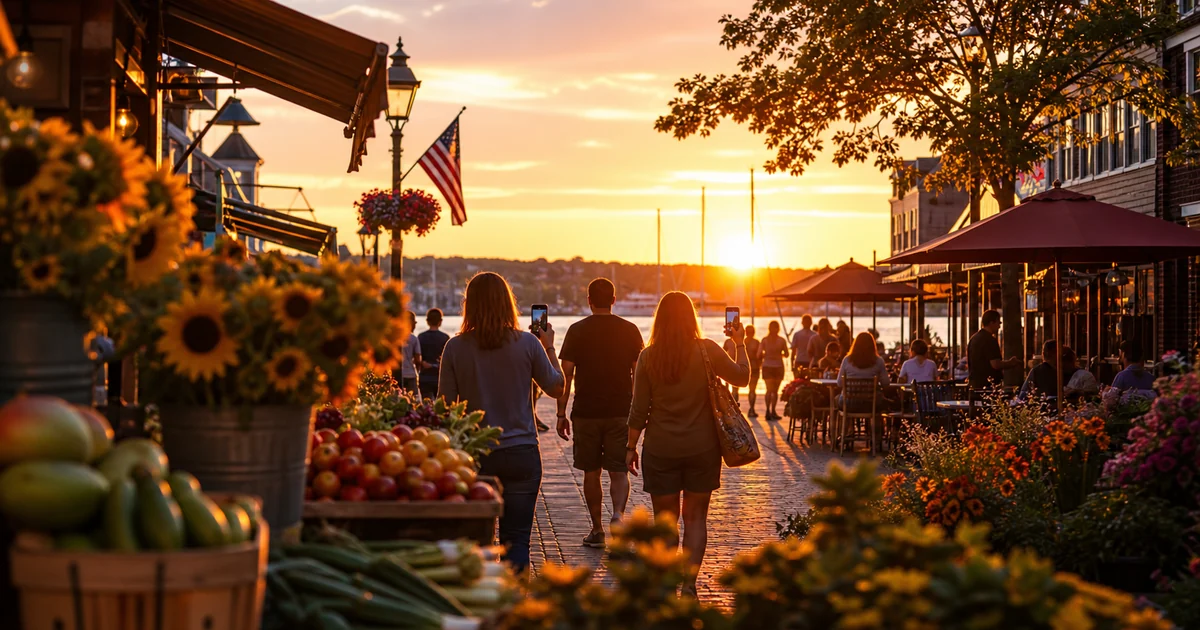
Read more →The Baltimore Sun's annual readers'-choice ballot spanning 200+ local business categories across the Baltimore metro area, decided by a single online vote rather than a separate nomination round.
Disclosure: buyvotescontest.com is a vote-promotion service. This is independent, informational coverage of a public contest run by a third party; we are not affiliated with the organizer. Where our own services are relevant they are clearly labeled, and the contest's official rules always take precedence.
Skip the write-in stage entirely. That's what separates Baltimore Sun's Best from its two closest siblings in the same state. Baltimore Magazine's Best of Baltimore opens with an online nomination form, narrows the field to finalists, votes, then prints results in a dedicated issue: three stages stretched across months. The Sun's ballot has one. Readers vote directly on the live page, and whichever category a business fits, that's the only round it needs.
The category count is the other structural fact worth sitting with. 200-plus groups spanning the Baltimore-metro footprint (dining, home services, health, retail, and more) add up to a wider spread than a single-city dining poll or a resort town's 42-poll lineup. A dry cleaner and a landscaper both have a real category here; neither is squeezed into a generic "services" catch-all.
| Item | Detail |
|---|---|
| Organizer | Baltimore Sun |
| Official ballot | baltimoresun.com/best-of/ |
| Scope | Baltimore-metro footprint, statewide reach |
| Category count | 200+ local business categories |
| Structure | Single-stage vote, no separate nomination round |
| Vote cap | One vote per category per round |
| Results venue | Published on baltimoresun.com when each round closes |
That one-round design cuts real planning risk. A three-stage poll can lose a business at the nomination gate months before voting even matters. Here, the category and the ballot are the entire campaign target from day one. See the Maryland contest hub for how this stacks up against the state's other readers'-choice programs.
Maryland doesn't have one "best of" format. It has three, running at the same time, built by three different organizers with three different rulebooks. Confusing them costs a business real reach, because a supporter told to "go vote" without knowing which ballot ends up on the wrong page entirely.
| Program | Organizer | Structure | Scope |
|---|---|---|---|
| Baltimore Sun's Best | Baltimore Sun | Single-stage vote, 200+ categories | Baltimore-metro, statewide reach |
| Best of Baltimore | Baltimore Magazine | Nominate, then vote, then print | Citywide Baltimore |
| Best of Ocean City | OceanCity.com | 42 polls, combined web + Facebook | One resort town |
A Baltimore County home-services company that also does seasonal work in a resort market could plausibly enter more than one of these. But each has its own vote cap, its own timeline, and its own results venue. Treating them as interchangeable is how a campaign wastes a reminder on the wrong link. Businesses building outreach for any of these three can pull structure from award-style vote campaigns, which covers planning that applies across all readers'-choice formats, not just this one.
No finalist gap to wait through. A three-stage poll has a dead period between nomination close and voting open where nothing a business does matters. The Sun's ballot has no equivalent. From the moment a round opens, every vote counts toward the final tally, so a delayed launch costs real ground immediately rather than during a quiet stretch.
Baltimore Magazine's nomination round forces a category choice early, then locks it before voting. Here, the choice still matters just as much, but there's no separate write-in stage to get it wrong in first. A business only needs to confirm the right category on the live ballot itself, then focus every reminder on that one page.
A dining business weighing whether to prioritize this ballot over a narrower local contest can compare notes against restaurant vote campaign planning, which covers reminder cadence for readers'-choice formats broadly.
Category groups the ballot, not ZIP code. A Towson dining nominee and a Catonsville dining nominee land in the same race if they share a category label. The Sun's footprint spans the whole Baltimore metro, so county lines inside that area don't split the field the way a state-versus-state contest would.
| Area | Likely customer network |
|---|---|
| Baltimore City | Dense neighborhood networks, transit-adjacent foot traffic |
| Baltimore County | Suburban family and service-business networks |
| Towson | Retail, dining, university-adjacent customer base |
| Annapolis | Civic and tourism-facing business networks |
| Columbia | Planned-community family and retail networks |
| Catonsville, Ellicott City | County-side community and small-business loyalty |
| Dundalk | Working-class neighborhood and legacy-business networks |
A business drawing customers from more than one of these areas gets a wider organic reach on a metro-wide ballot than it would on a single-neighborhood poll. That same width means a generic reminder has to name the business and category clearly, since a Columbia reader has no built-in reason to recognize a Dundalk shop's name. For the underlying standard behind any legitimate push here, see what a real vote campaign looks like, and for the general mechanics this single-stage ballot runs on, how online contest votes work.
There's no nomination form to fill out first here. Go straight to the ballot, find the business under its category (dining, home services, health, retail, whichever of the 200+ groups fits), and vote. That single-stage design is the first thing that separates this from a print-magazine poll built around a nominate-then-vote sequence.
The ballot allows one vote per category per round. A business that fits two plausible categories (a bakery that also caters, say) needs supporters voting in the correct one, not scattering votes across both and diluting either tally.
The Sun runs this as a recurring annual cycle, but the live ballot page is the only authority on when the current round opens and closes. Bookmark the ballot itself rather than a date from a prior year's promotion.
Winners publish when that cycle's voting closes, on the Sun's own site. A screenshot from a previous round, or a reseller's badge, isn't the same as a category result the Sun has actually printed for the current year.
12 answers covering legality, delivery, quality, pricing and platform specifics.
Last reviewed June 2026. Contest dates, rules and vote caps change each season — always confirm the current rules on the official contest page before you vote.
Practical guides, technical deep-dives, and anonymized case studies.60+ articles. Selection rotates.
hCaptcha vs reCAPTCHA in contest voting — how each system works, which vote services handle them, and what buyers must know before ordering in 2026.
Read more →
Win your Facebook local business award contest in 2026 — community mobilization, network activation, and when professional vote services pay off. Act now.
Read more →
How fitness brands win Instagram contests in 2026 — vote strategy, transformation content, community mobilisation, and post-contest revenue conversion.
Read more →
Mobilise your Telegram channel for contest votes in 2026 — announcement copy, bot automation, timing windows, and when to layer in a professional vote service.
Read more →
Buy Australian Facebook contest votes in 2026 — current pricing tiers, geo-targeting accuracy, AEST delivery windows, and account quality benchmarks.
Read more →
Complete guide to sourcing US-based Facebook contest votes in 2026 — pricing benchmarks by tier, voter behavior patterns, and geo-targeting best practices.
Read more →
Hi 👋 — drop your contest URL and I'll send a price quote within an hour. No card needed yet.