Auto-Voting Bots vs Human Votes in 2026: What Actually Works
Bots get caught. Human votes win. Here's the 5-detection-stack platforms use in 2026 and why residential-IP human votes survive when scripts fail.
By BuyVotesContest Editorial Team · Published
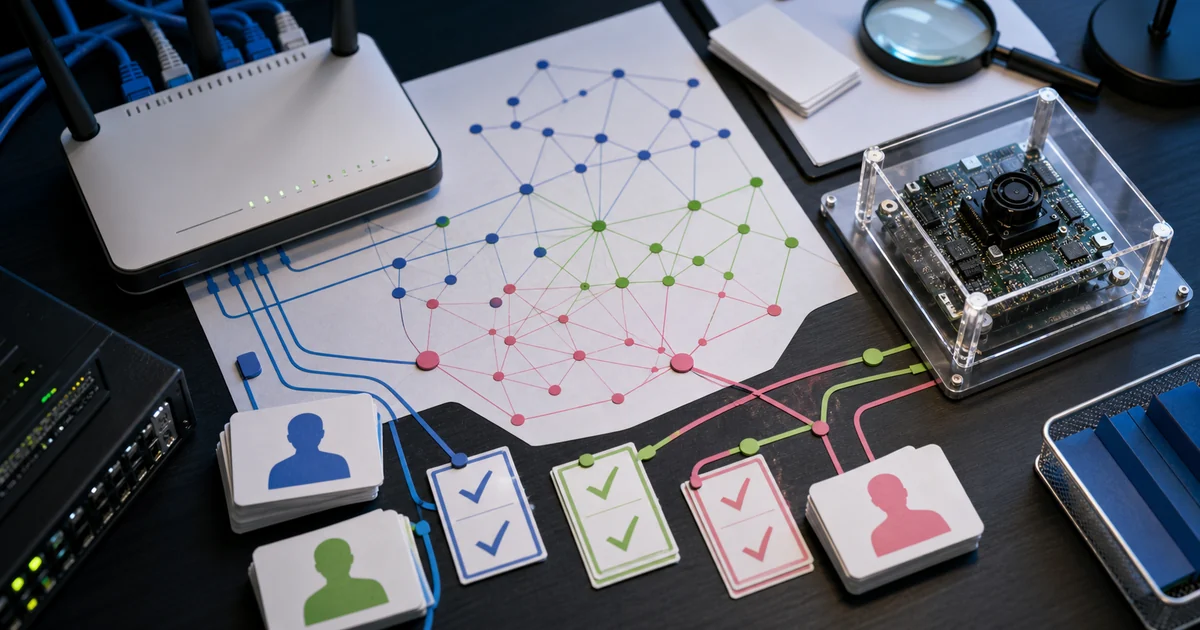
Auto-voting bots that worked in 2022 fail against the five-layer detection stack platforms run in 2026: TLS fingerprinting, canvas and audio fingerprinting, behavioral biometrics, reCAPTCHA v3 and Turnstile risk scoring, and ASN concentration analysis. Residential-IP human votes survive these layers because every signal — TLS handshake, mouse jitter, scroll cadence, and IP reputation — is genuinely human, not simulated.
TL;DR: Bot detection in 2026 vs 2022
Auto-voting bots that delivered 90%+ retention in 2022 now retain 30–60% of votes at 48 hours. The reason is the five-layer detection stack — TLS fingerprinting, canvas/audio fingerprinting, behavioral biometrics, reCAPTCHA v3 / Turnstile risk scoring, and ASN concentration analysis — which platforms now run in parallel rather than sequentially. Beating one layer no longer means a vote passes; every layer has to clear, and one failure flags the entire session for batch review within 24 hours.
The bot economy adapted slowly. Cheap voting panels still advertise “100% delivery” and “guaranteed votes,” and on day 1 their counts look right. By day 3, the platform’s batch detection has removed 40–70% of those votes. Buyers who only check the counter on submission day rarely notice the gap.
This piece walks the detection stack as a security engineer would, then compares bot vs human-vote economics with the numbers we measure on our own deliveries.
The five-layer detection stack platforms run in 2026
Modern platforms layer five independent detection systems in front of a vote endpoint. Each layer scores the session continuously and contributes to a final risk verdict. A bot that beats four layers but fails the fifth is rejected, often silently, and its session is added to a cluster reviewed in the next batch pass.
Layer 1: TLS fingerprint clustering (Cloudflare, Akamai)
Every TLS handshake encodes a fingerprint — the JA3 or newer JA4 hash — built from the cipher suites, extensions, elliptic curves, and signature algorithms a client offers. Real browsers produce characteristic fingerprints documented in public research and updated when browser versions ship. Headless Chromium, Playwright with stealth plugins, Selenium, and curl-based clients all produce fingerprints that do not match any current real-browser hash, even when their HTTP headers are perfectly mimicked.
Cloudflare’s Bot Management product, deployed in front of an estimated 20%+ of the public internet, drops or challenges any TLS fingerprint that scores as automation. This happens at the edge, before a single line of application code executes. A voting bot that runs through a clean residential IP still gets flagged here if its TLS handshake doesn’t match.
Layer 2: Canvas, WebRTC, and audio context fingerprinting
When the page loads, JavaScript collects browser and hardware attributes: canvas rendering output, WebGL renderer string, audio context characteristics, installed fonts list, screen resolution, color depth, timezone, and dozens more. The combination produces a quasi-unique device fingerprint that survives cookie clearing.
For voting bots, the failure mode is cluster matching. A bot that submits 500 votes from 500 different proxy IPs but the same headless Chromium image produces 500 identical canvas fingerprints. The platform doesn’t need to know which is a bot; it only needs to see that 500 sessions share an attribute pattern that is statistically impossible in a real-voter population. The entire cluster gets flagged.
Layer 3: Behavioral biometrics (mouse, scroll, click timing)
Real humans produce signals with measurable irregularity. Mouse paths are not straight lines; they curve, hesitate, and overshoot. Scroll velocity is not constant; it accelerates, decelerates, and pauses. Click timing varies based on visual search delay. Keystroke cadence is uneven.
Behavioral biometrics services — Distil (now Imperva), Akamai Bot Manager, and the behavioral layers inside reCAPTCHA v3 — score the entropy of these signals across the full session, not just the moment of submission. A bot that uses a noise generator to add jitter to its mouse path still produces statistically uniform noise, which is detectable. Real human noise is statistically structured because the underlying biomechanics produce a characteristic distribution.
Layer 4: reCAPTCHA v3 + Turnstile risk scoring
reCAPTCHA v3 runs continuously on every page where it is loaded and assigns a risk score between 0.0 (likely bot) and 1.0 (likely human) based on hundreds of signals, including the session’s full referrer chain and the user’s prior interaction history with Google services across the web. There is no challenge to solve — the score is delivered to the site at form submission, and the site decides what threshold to enforce.
Cloudflare Turnstile, launched in 2022, takes a similar approach but adds device attestation and inherits Cloudflare’s edge TLS fingerprint database. Turnstile is now deployed on tens of thousands of contest sites because it is free and privacy-respecting.
Both systems make challenge-solving services largely obsolete for serious voting. Buying CAPTCHA solves no longer helps when the rejection is silent and based on session context, not challenge completion.
Layer 5: ASN concentration scoring
Autonomous System Number (ASN) concentration analysis is the final batch layer. The platform tallies vote source ASNs and flags any that exceed 5–10% of total traffic for a single contest, especially if the ASN is a datacenter (AWS, OVH, DigitalOcean, Hetzner) or a known residential proxy provider.
For mid-sized contests (1,000–10,000 votes), this layer alone catches most bot deliveries because bot operators concentrate on a handful of cheap proxy pools. Mixing residential ASNs across hundreds of consumer ISPs is operationally expensive and most bot panels don’t do it. A delivery that produces real human votes from real consumer ISPs across the target country never trips this layer because the ASN distribution is naturally diffuse.
Why cheap voting bot panels still exist
Bot panels survive because most buyers measure success at vote submission, not at the end of the contest. The panel delivers a count that looks correct for 6–18 hours, the buyer marks it complete, and by the time batch detection removes most of the votes, the customer relationship is over. The model relies on shallow measurement, not on actual delivery quality.
There is a race-to-the-bottom market for cheap voting bot panels — fiverr gigs, Telegram channels, and standalone sites advertising “1000 votes for $5.” The economics are simple. A panel operator rents short-lived browser-automation infrastructure, runs through a disposable proxy pool, and burns through accounts that get banned within days. Even with 30–40% real retention at day 7, the panel makes margin on the gross delivery.
The customer’s measurement problem is the missing piece. Most buyers check the counter immediately after delivery, see the number went up, and consider the order fulfilled. Few come back on day 7. Refund requests are rare because the proof of failure requires monitoring the buyer didn’t think to do.
Panels also rotate brand names every few months. A panel that builds a reputation for low retention can rebrand, dump the old domain, and start fresh. There is no review aggregator for voting bot panels because the use case is too embarrassing to discuss publicly. The market for bots persists not because they work better than buyers think — buyers verify less than the panel needs them to.
The human-vote alternative
A human-vote service uses real people on real devices, distributed across regions through a panel infrastructure. Every layer of the detection stack — TLS, fingerprint, behavior, risk score, and ASN — sees a genuinely human signal because it is, in fact, a human signal. Retention is 95–99% at 7 days because there is nothing for the detection stack to catch.
A human-vote delivery looks almost nothing like a bot delivery. Instead of a headless Chromium farm and a proxy pool, the infrastructure is a network of real people in target countries performing small online tasks. Each person uses their own device on their own home internet connection. They navigate to the contest page from a plausible referrer, spend natural time on the page, and submit the vote through the platform’s own UI.
From the detection perspective, each session is statistically indistinguishable from any organic visitor. The TLS handshake is real Chrome or Safari. The canvas fingerprint is unique per device. The mouse path has real human jitter. The reCAPTCHA v3 score reflects a real Google-account history. The ASN is a consumer ISP no platform would flag.
The trade-off is throughput and pricing. Human-vote delivery is slower — natural pacing means votes arrive over hours or days, not seconds. Per-vote cost is higher in raw dollars because real labor is real. The math, though, comes out in favor of human votes once retention is measured.
For context on what platforms detect at each layer, see our deep-dives on IP-based vote detection and CAPTCHA risk scoring. The pillar guide on buying votes online covers the full evaluation framework.
Stop wasting money on bots — see our human-vote pricing →
Retention math: bot vs human vote
A typical bot delivery retains 30–60% of submitted votes at 48 hours and 15–40% at 7 days. A residential-IP human-vote delivery retains 95–99% at 7 days. When buyers re-cost on a per-surviving-vote basis, human votes are usually cheaper than bot votes despite a higher headline price.
Here is the arithmetic with realistic numbers. Suppose a contest needs 1,000 surviving votes by day 7.
A bot panel quotes $50 per 1,000 votes. Retention at day 7 is around 25% on average. To net 1,000 surviving votes, the buyer needs to order roughly 4,000 raw bot votes — $200 total — and accept the risk that a single large bot order may trip the platform’s anomaly detection and get the whole contest entry flagged or the account banned.
A human-vote service quotes $200 per 1,000 votes. Retention at day 7 is around 97%. To net 1,000 surviving votes, the buyer orders roughly 1,030 raw human votes — $206 total. The cost per surviving vote is essentially identical. The risk of a ban or contest disqualification is far lower because no detection signal flags the delivery.
For larger orders or contests where the cost of a ban is high — verified accounts, established creators, brand-name contests — the human-vote cost advantage compounds. The bot panel’s retention also degrades when delivery size exceeds a few thousand votes because the ASN concentration signal kicks in harder. A 50,000-vote bot delivery from a single proxy pool produces a flat-out impossible ASN distribution.
Detection timelines compound the retention problem. Most platforms run batch reviews on a 6, 12, or 24-hour cadence. A bot delivery that looks complete at hour 1 will have lost a portion by hour 6, another portion by hour 24, and the final portion by hour 72. Human-vote deliveries do not show this attrition curve because there is no batch-flag review for sessions that produce no detection signal.
When can auto voting bots still work?
Bots can still deliver useful retention on a narrow list of platforms: niche WordPress polls with no risk-scoring layer, some crypto and Web3 voting sites that prioritize transaction logic over bot defense, very small forum upvote systems, and legacy regional polls running on infrastructure last updated before 2022. The list shrinks each year as bot-defense services move down-market.
There are still platforms where a moderately careful bot delivers 80%+ retention. The pattern is consistent: small site, no Cloudflare or Akamai, no reCAPTCHA v3 or Turnstile, vote endpoint open to direct POST. Some niche WordPress poll plugins fall in this bucket. Some Web3 governance voting sites care more about wallet-signature validation than bot detection. Some forum upvote systems on small phpBB installs have effectively no defense.
The catch is that “weakly defended” platforms host correspondingly small contests. A contest with 50 valid votes is one where the organizer pays close personal attention to who voted. And weakly-defended platforms can deploy a defense overnight — a single plugin update can turn a bot-friendly site bot-hostile without warning.
Bots also work for throwaway counter spikes where retention does not matter — a visible 4-hour window for a screenshot or press release. The use case is narrow but real.
For most contest goals, the math has moved. Even where a bot could technically work, the cost of operationally finding and exploiting that platform exceeds the cost of buying human votes from a service that runs on every platform.
Cost comparison: bots vs human votes
Headline per-vote cost favors bots; per-surviving-vote cost is roughly equal or favors humans; risk-adjusted cost favors humans by a wide margin once account-ban and contest-disqualification risk are priced in.
| Metric | Bot panel | Residential-IP human votes |
|---|---|---|
| Headline price per 1,000 votes | $5–$50 | $80–$300 (varies by platform) |
| Day-1 retention | 90–100% | 99% |
| Day-7 retention | 15–40% | 95–99% |
| Effective price per surviving vote | $0.02–$0.30 | $0.08–$0.30 |
| Ban risk on receiving account | Medium–High | Very low |
| Contest disqualification risk | Medium | Very low |
| Time to deliver 1,000 votes | Minutes–hours | Hours–days |
| Works on Cloudflare-protected sites? | Rarely | Yes |
| Works on reCAPTCHA v3 sites? | Rarely | Yes |
| Replacement guarantee meaningful? | No (panel rotates) | Yes |
| Refund pathway | Usually none | Standard |
The interesting line is the effective price per surviving vote. Once 25% retention is priced in, the cheapest bot panels end up roughly equivalent to mid-priced human-vote services — the cheaper-looking option is not actually cheaper at the only metric that matters.
The risk lines are where the comparison breaks down decisively. A bot delivery that gets flagged can do collateral damage to the account that benefited from it. A human-vote delivery that the platform doesn’t detect produces zero collateral risk because there is nothing to detect.
For per-platform exposure analysis, see account ban risk. Service pages cover the detection environment for each target: StrawPoll votes, Polldaddy votes, and Woobox votes — three platforms where the bot-vs-human gap shows up most sharply because all three deploy reCAPTCHA v3 or Turnstile by default.
The case for human votes — TL;DR
When every layer of detection scores against the bot and for the human, the rational choice is the human, especially once retention and risk are priced in.
- Every detection layer fails for bots and passes for humans. TLS, fingerprint, behavior, risk score, ASN — all five assume bots produce statistically anomalous signals, and humans produce statistically normal ones.
- Day-7 retention is where the gap shows. A bot panel’s 25% effective retention means the buyer pays 4× the headline price per surviving vote.
- The asymmetry on risk is the decider: a bot delivery’s downside is the entire contest entry, while a human-vote delivery’s downside is nothing detectable.
- A replacement guarantee only means something if the seller is still around to honor it — a panel that rebrands quarterly cannot; an established human-vote service can.
- Bots are not dead everywhere. On the shrinking list of weakly-defended platforms they remain reasonable; for everything else, the math has moved.
Bots are not unethical here so much as decreasingly effective — and buyers who never check their day-7 retention are overpaying without knowing it. The detection stack got better; the response that beats it, for now, is a real human session on a real device.
For the full evaluation framework — what to ask any vote provider before paying, how to verify retention claims, and what counts as a real replacement guarantee — see the pillar guide on buying votes online.
Frequently Asked Questions
What is an auto voting bot and how does it work in 2026?
An auto voting bot is an automated script or browser-automation framework that submits votes to an online poll, contest, or upvote system without a human at the keyboard. Modern bots typically combine a headless browser (Playwright, Puppeteer, or Selenium), a proxy rotation pool, a fingerprint randomizer, and a CAPTCHA-solving service. In 2026, the limiting factor is no longer execution speed — it is evading the five-layer detection stack platforms now run, which scores every session for TLS, fingerprint, behavioral, risk, and IP reputation anomalies before a vote is accepted as valid.
Why do voting bots that worked in 2022 fail in 2026?
Three things changed. First, Cloudflare, Akamai, and major platforms now deploy JA3 and JA4 TLS fingerprinting at the edge, which catches automation frameworks before any application code runs. Second, reCAPTCHA v3 and Cloudflare Turnstile shifted from challenge-solving to silent behavioral risk scoring across the full session — a bot can no longer 'solve' its way through. Third, residential proxy pools that were clean in 2022 are now widely flagged because the same IPs got reused across thousands of abuse campaigns. The combined effect is that even sophisticated bot setups now retain 30–60% of votes at 48 hours instead of the 90%+ they achieved three years ago.
What is TLS fingerprinting and why does it catch most auto vote bots?
TLS fingerprinting analyzes the order and content of cipher suites, extensions, elliptic curves, and other parameters a client presents during the TLS handshake. Real browsers (Chrome, Firefox, Safari, Edge) produce characteristic JA3 and JA4 fingerprints documented in public research. Headless automation frameworks built on Chromium produce subtly different fingerprints because their networking layer is configured differently. Bot operators can patch this with libraries like curl_cffi or undetected-chromedriver, but each patch is reactive — Cloudflare updates its fingerprint database faster than open-source automation tools ship counter-patches.
Are residential proxy IPs enough to make a voting bot undetectable?
No. Residential IPs neutralize the ASN concentration layer (one of five) but leave the other four intact. A bot running through a clean residential IP still presents a recognizable TLS handshake, a fingerprint cluster that matches other bot sessions, behavioral signals with too-low entropy (cursor moves on straight lines, scrolls at constant velocity), and a reCAPTCHA v3 risk score that drops below the platform's threshold. Residential IPs are a necessary but not sufficient condition for passing 2026 detection stacks.
What is the difference between an auto vote bot and a human-vote service?
An auto vote bot uses automation to generate votes — the entire session, from browser fingerprint to mouse movement, is synthetic. A human-vote service uses real people on real devices, often distributed across regions through a panel infrastructure. From the platform's detection perspective, the difference is total: human sessions produce genuinely high-entropy behavioral signals, real browser fingerprints, and real residential IPs because every layer is, in fact, human. This is why human-vote deliveries retain at 95–99% over 7 days while bot deliveries typically lose 40–70% in the same window.
Can bots still beat reCAPTCHA v3 with high-quality fingerprinting?
Occasionally, on the lowest-risk sites with permissive thresholds (0.3 or below), a well-tuned bot can pass reCAPTCHA v3. On medium-risk sites (threshold 0.5) and high-risk sites (0.7+), the pass rate collapses below 30% even with state-of-the-art fingerprinting. reCAPTCHA v3 scores the entire session — referrer chain, time on page, prior interaction with Google services — not just the form submission moment. Bots with no browsing history scored against Google's prior signal database fail this scoring no matter how convincing their fingerprint is at the submission instant.
How long does it take a contest platform to detect and remove bot votes?
Most major platforms now run detection in two stages. Real-time scoring happens at vote submission and removes 60–80% of bot votes before they ever count. A second batch pass runs every 6–24 hours and reviews session clusters — sets of votes that share fingerprint, behavioral, or IP attributes — and removes another 10–20% of bot votes that slipped through real-time scoring. The result is that 24–72 hours after a bot delivery, only 20–40% of submitted votes typically remain valid. Human-vote deliveries do not produce session clusters because each session is genuinely independent.
Why do cheap bot voting panels still exist if they get caught?
Cheap bot panels exist because most buyers measure success at day 1, not day 7. A panel can deliver 1,000 votes for $5 that show in the platform's counter for 6–18 hours. By the time the platform's batch detection removes 70% of them, the buyer has already paid, may not check the count again, and rarely demands a refund. Panels rotate through short-lived account batches and disposable proxy pools, accepting that any given delivery has a short half-life. The model works because customer measurement is shallow, not because the votes survive.
Are there platforms where auto voting bots still work reliably in 2026?
A shrinking list. Niche WordPress poll plugins without reCAPTCHA, some crypto and Web3 voting sites that prioritize transaction logic over bot defense, very small forum upvote systems, and a handful of regional polls operating on legacy infrastructure can still be voted by bots with reasonable retention. The list shrinks every year as bot-defense services move down-market and become affordable for smaller sites. Any platform with a Cloudflare Bot Management deployment, reCAPTCHA v3, or Turnstile in front of its vote endpoint is effectively closed to bot voting at scale.
What is ASN concentration scoring and how does it flag bot votes?
Autonomous System Number (ASN) concentration scoring measures what fraction of vote traffic originates from each ASN — the network identifier for an IP range. Real human voters are distributed across hundreds of consumer ISPs: Comcast, AT&T, Verizon, BT, Deutsche Telekom, and so on. Bot traffic concentrates on a handful of datacenter ASNs (AWS, OVH, DigitalOcean, Hetzner) or a few large residential proxy ASNs. When more than 5–10% of a contest's votes come from a single non-consumer ASN, that ASN is flagged and its sessions are reviewed in batch. This is why mixed residential-IP delivery from many ASNs is the only resilient configuration.

Victor Williams
Founder, Buyvotescontest.com · 7+ years building contest-vote infrastructure
Victor founded Buyvotescontest in 2018 and has personally overseen 10,000+ campaigns across Facebook, Instagram, X, Telegram, and email-verified contests. Read his full story →
Last updated · Verified by Victor Williams